Modern robot Sophia
Sophia is a social humanoid robot developed by Hong Kong-based company Hanson Robotics. Sophia was activated on April 19, 2015 and made her first public appearance at South by Southwest Festival (SXSW) in mid-March 2016 in Austin, Texas, United States.She is able to display more than 62 facial expressions.
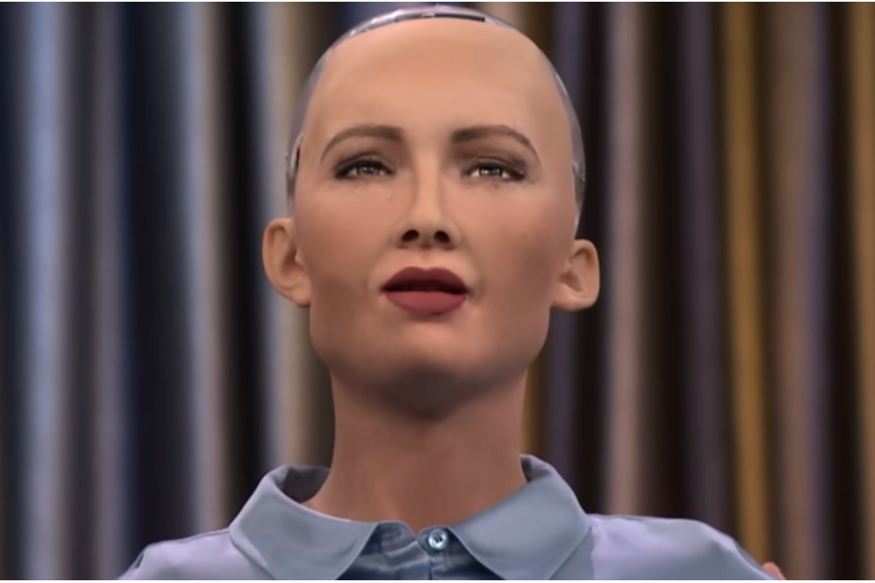 Sophia has been covered by media around the globe and has participated in many high-profile interviews. While interviewers around the world have been impressed by the sophistication of many of Sophia's responses to their questions, the bulk of Sophia's meaningful statements are believed by experts to be somewhat scripted.
In October 2017, the robot became a Saudi Arabian citizen, the first robot to receive citizenship of any country. In November 2017, Sophia was named the United Nations Development Programme's first ever Innovation Champion, and the first non-human to be given any United Nations title
Sophia was created by Hanson Robotics in collaboration with AI developers, including Google’s parent company Alphabet Inc, who built her voice recognition system, and SingularityNET, which powers her brain.
 Sophia was activated on April 19, 2015. The robot, modeled after actress Audrey Hepburn,is known for her human-like appearance and behavior compared to previous robotic variants. According to the manufacturer, David Hanson, Sophia uses artificial intelligence, visual data processing and facial recognition. Sophia also imitates human gestures and facial expressions and is able to answer certain questions and to make simple conversations on predefined topics.
Cameras within Sophia's eyes combined with computer algorithms allow her to see. She can follow faces, sustain eye contact, and recognize individuals. She is able to process speech and have conversations using Alphabet’s Google Chrome voice recognition technology and other tools. Around January 2018 Sophia was upgraded with functional legs and the ability to walk.Sophia is conceptually similar to the computer program ELIZA, which was one of the first attempts at simulating a human conversation.The software has been programmed to give pre-written responses to specific questions or phrases, like a chatbot. These responses are used to create the illusion that the robot is able to understand conversation, including stock answers to questions like "Is the door open or shut?"
David Hanson has said that Sophia would ultimately be a good fit to serve in healthcare, customer service, therapy and education. Sophia runs on artificially intelligent software that is constantly being trained in the lab, so her conversations are likely to get faster, Sophia's expressions are likely to have fewer errors, and she should answer increasingly complex questions with more accuracy.


Comments
Post a Comment