About Technology and its History
 Technology is the use and knowledge of tools, techniques, trades, systems and organization methods. This controls and adjusts the environment. Technology is a consequence of the development of science and engineering, although some technologies have progressed even before the development of these two concepts. Technology is a term of etymological origin in Greek, from the word "technologia" ("τεχνολογία") - "techne", "τέχνη" ("skill") and "logia", "λογία" ("science"). However, the strict definition is elusive; "technology" may refer to material objects, such as machines, hardware or tools, but may also relate to broader topics such as systems, methods of organization and techniques. The term can be applied generally or in specific areas.
The human race has begun to use technology by transforming rich natural resources into simple tools. The prehistoric discovery of fire control capabilities has increased the amount of available food sources, and the discovery point has helped people move and control the environment. Technological discoveries, such as the print outlet and the Internet, have demolished all communication barriers and allowed people to communicate with each other on a global scale. However, not all technologies are used for peace purposes; the development of weapons with more and more destructive power went through history, from pale to nuclear weapons.such as "construction technology", "medical technology" or "top technology". Technology has influenced society in many ways, both positively and negatively. In many societies, technology has influenced the development of more advanced economies, such as today's global economy.
Until recently it was believed that the development and application of a technology concept, which is related only to human beings, but recent scientific studies show that others receive (such as chimpanzees), as well as some dolphin communities, developed simple tools and learned to transmit this knowledge of the next generation.
History of Techonology
Prehistory (- 5000 BC)
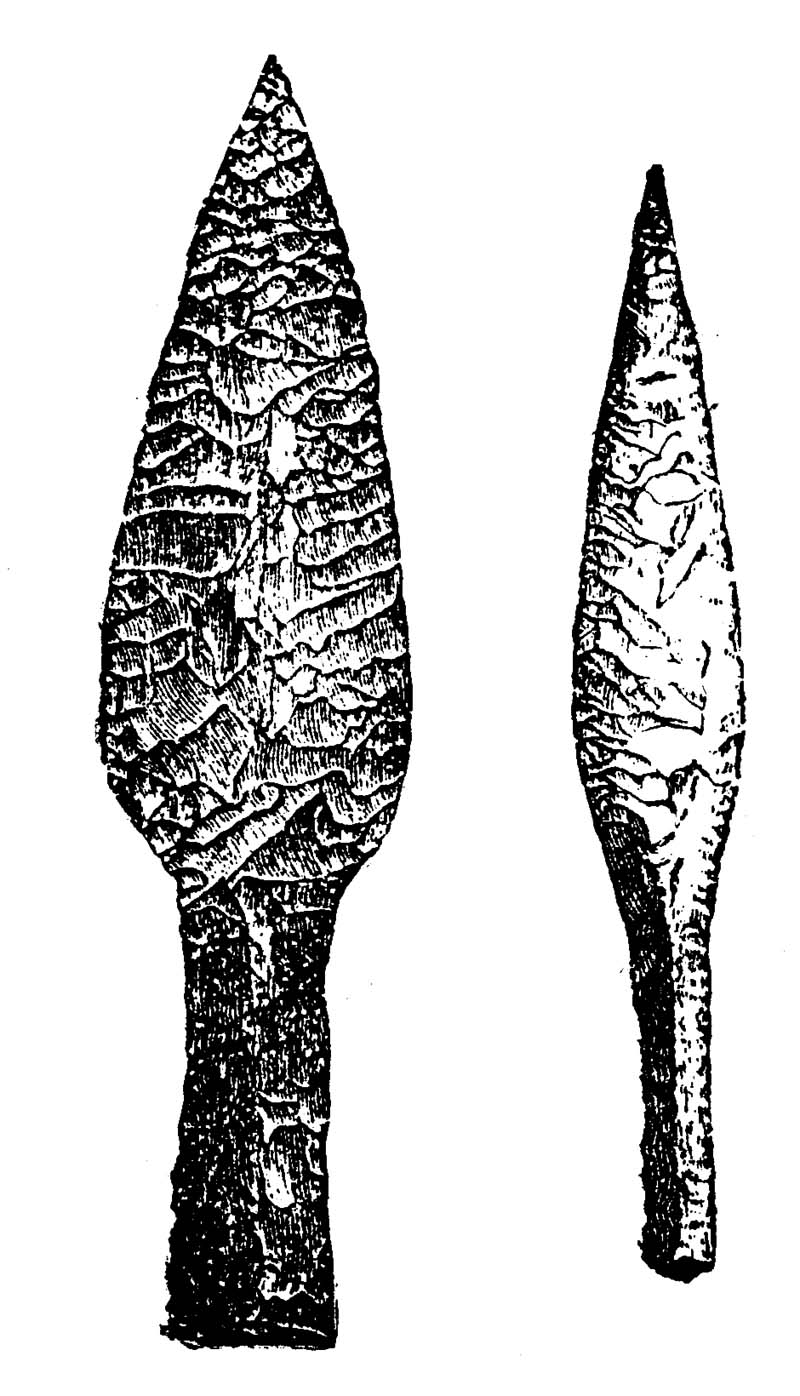 The Paleolithic Time Lance used by prehistoric people to hunt and fight.
The history of technology is as old as humankind. Primitive tools have been found with almost any remains of the remains of ancient people. The anthropologists have discovered the tools they have made of the prey, which are backed by more than 2 million years. The earliest tools, such as manual ax and scraper, were largely present to help early people in their role as a hunter-gatherer. However, the life of hunter-gatherers, which was characteristic of early Paleolithic, included limited use of technology, and these early technologies relied on natural resources such as stone, wood and other vegetation, bones and other animal nus products, to make simple tools, such as a pallet.
Discovery, use, and later fire control, a simple source of energy, which has many uses, has been a milestone in the technological development of mankind. The firing was taken out of the volcano or from the burning object after the lightning strike, and the flame came out of that flame.
Antique (5000 BC - 0 year)
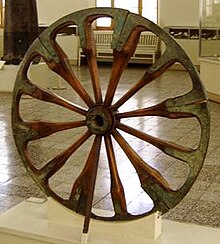 Further advancements led to the furnace development, which allowed the melting and forging of metals (which appeared in nature in ralatively pure form). Gold, copper, silver and lead were some of these metals. The advantages of copper over stone, bone and wood tools were obvious to early people, and copper started to be used since the early Neolithic (about 8,000 BC). Finally, working with metals led to finding alloys, such as bronze and brass (about 4000 BC). The first use of iron alloys, such as steel, dates back to the 1400th century, p. In the meantime, people began to rule other forms of energy. The oldest known use of wind power is in sailing. The earliest information on the use of ships was found in Egypt and dates back to 3200 years. p. e. According to archaeologists, the point was invented around 4000 years p. e. It was invented probably in the Mesopotamian region (today's Iraq).
Modern history (0 year - present)
Scientific advancement and the discovery of new concepts later allowed for powered flight and advancements in medicine, chemistry, physics, and engineering. The rise in technology has led to skyscrapers and broad urban areas whose inhabitants rely on motors to transport them and their food supply. Communication was also greatly improved with the invention of the telegraph, telephone, radio and television. The late 19th and early 20th centuries saw a revolution in transportation with the invention of the airplane and automobile. The 20th century brought a host of innovations. In physics, the discovery of nuclear fission has led to both nuclear weapons and nuclear power. Computers were also invented and later miniaturized utilizing transistors and integrated circuits. Information technology subsequently led to the creation of the Internet, which ushered in the current Information Age. Humans have also been able to explore space with satellites (later used for telecommunication) and in manned missions going all the way to the moon. In medicine, this era brought innovations such as open-heart surgery and later stem cell therapy along with new medications and treatments.Complex manufacturing and construction techniques and organizations are needed to make and maintain these new technologies, and entire industries have arisen to support and develop succeeding generations of increasingly more complex tools.


Comments
Post a Comment